Political Failure

Well, we just witnessed what is probably the most ineffective outcome from the Copenhagen summit possible.  Nothing binding, no real deadlines and no new commitments.  Julieanne has a pretty good analysis on her gardening blog Gwenfar’s Lottie.

When are countries going to include agriculture in these discussions anyway!

The EU has also just finalized their budget next year, with roughly 45% earmarked for agriculture.  As is usual for these kinds of things, there seems to be little concrete information online, but indications are this too was a total failure by most accounts.  No big overhaul that we’ve been promised for years, no new money for small and family run farms, no new money for organic agriculture, no caps on the largest recipients of farm aid and no obvious cuts for the environmentally damaging factory farm industry that provides most of our food.

What we have is a promise for next year, a total overhaul of the budget.  There doesn’t seem like a lot to look forward to here either.  France, Ireland and Poland are promoting business as usual, and other countries are supporting “a shift in spending away from agriculture towards innovation, energy and tackling climate change.”  We’ll have to wait a while anyway for whatever gains are made on these policies, because they don’t come into effect until 2014.

While no one is going to stand up against innovation, without reforms in patent and other intellectual property rights laws, all that’s going to happen is we find ourselves in the middle of another GMO fiasco.  That is we’ll end up with technology and innovation that doesn’t offer any particular benefit to consumers, isn’t wanted, is potentially dangerous and is forced on us regardless.

Who knows what it means to increase spending in ‘energy and tackling climate change’ in the context of all of this.  Important topics for sure, but what exactly does it mean?

Snow

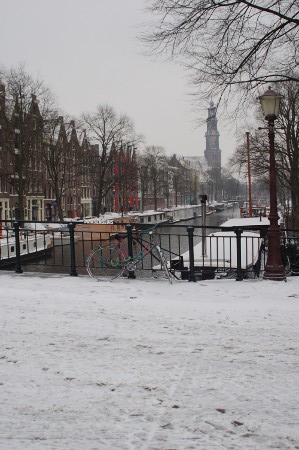
amsterdam_snow1

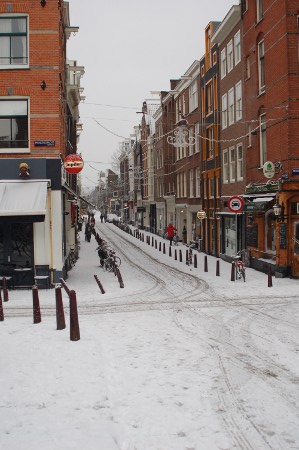
amsterdam_snow2

It’s snowing today in Amsterdam, following a very cold snap.

Just when I thought weather patterns might be returning to something resembling normal, the weather in the last week or so has been pretty extreme for here.

Of course extreme weather has been hitting most of Europe, among other things leaving 2000 passengers stranded overnight half way between the UK and France in the channel tunnel.  Traffic choas is being reported all over Europe.  Also in the news is a snowstorm hitting the US north east.

Where I’m At

You’ll have to pardon me as I reflect on my past a bit here.  I grew up in Chicago, and while I haven’t been there since I was young, decades ago, I still like to have a little smile at people’s accents there from time to time.  Maybe it’s particularly fitting now that I speak a couple of other languages besides English, I appreciate how special regional accents can be.

Where you at? [sic]

Anyway, this is the local question, as people sometimes ask it there.  Given it’s context, it can mean just about anything.  It can refer to location, mental state or even how much money you have.  By design, it’s totally ambiguous.

So I’m going to let you know where I’m at.

I started blogging almost exactly 5 years ago.  Right away I started talking about the extreme loss of biodiversity the world was facing, and I encouraged people to start growing their own food, as well as saving and sharing their own seeds.  I spoke out sharply over the years about Europe’s oppressive seed laws, above all trying to educate people that these laws exist.  I spoke out about the GMOs the seed companies were spreading around the world, which wasn’t a secret to anyone.

This year, the president of the United States announced he was going to tear up part of his lawn and plant a mostly heirloom vegetable garden.  To say I was astonished is a huge understatement.

Seed laws in Europe are beginning to fall apart.  Denmark started allowing sales of unregistered seeds under certain circumstances, and a number of other countries started with low cost registration of varieties.  Because Europe is fragmented in the way it is, it’s sometimes hard to get information on what’s going on in other countries, but it’s clear the tide is changing.

While it’s too soon to let our guards down, the indications are GMOs as they are presently available, are simply not going to be accepted by consumers, and are being phased out.

It’s too early to say we are reversing the losses to agricultural biodiversity, but things are looking a lot better than a few years ago.  The number of gardeners trading and saving seeds has become phenomenal!

I’ve spoken out against aspartame sweetener, and there’s now increasing awareness of the dangers associated with this product.

Even in the US, high fructose corn syrup seems like it’s on the way out.

As one of the more popular gardening blogs writing about these topics, it’s been an emotional and stressful time.  It’s made me realize I was both doing a good job predicting the future, but also playing a role in the changes as they were occurring.  People were listening to me, telling others and things were changing.

At the same time these things were changing, the popularity of my blog was increasing.  You have to understand, it’s the nature of the Internet, popularity of this nature does not occur with a few extra readers at a time. It increases exponentially.  When readership of my blog increases, it usually does so by doubling over the course of a few months, and continues to do this over and over.  It’s worth pointing out that it goes down sometimes too.

As the popularity of my blog increases, I can quickly find myself dealing with a lot of responsibilities all at the same time.  Answering emails and comments, fielding requests for seeds, planning events like the meeting in Oxford this year, and so on.  These kinds of things can lead to hours of work per day, and when they are increasing at the same rate as the readership of my blog, something eventually has to give.

Don’t get me wrong, I’m not complaining.  I value these things all as an important part of my blog, but I haven’t found a good way of automating and managing the growth of them yet.

Aside from all of this, I have a personal life too and other responsibilities to deal with too.

So all of this came to a head a few months ago, and this is why I’ve been so quiet lately.  An unexpected holiday as it were.  Lots of people have been waiting for things from me, and have been disappointed.  I have stacks of unanswered emails, and lots of seeds and other plant materials waiting to go out.

I hope to start getting back into the swing of things over the holidays, and I will soon contact as many of you as possible who are still waiting for me for some reason.  If I don’t get in touch with you, please contact me again.  I’m sure a lot of things have just fallen through the cracks.

I’m now faced with the task of totally reinventing things, both because the world has changed so much and I need to find other topics to write about, and because I need to priortize better and figure out ways of managing the Internet growth cycles.  I thank you in advance for your patience, and also appreciate any suggestions you may have.

Above all, thank you everyone for reading this blog and caring about what have turned into some of the most important topics in today’s world.


The Alternative Kitchen Garden an A-Z

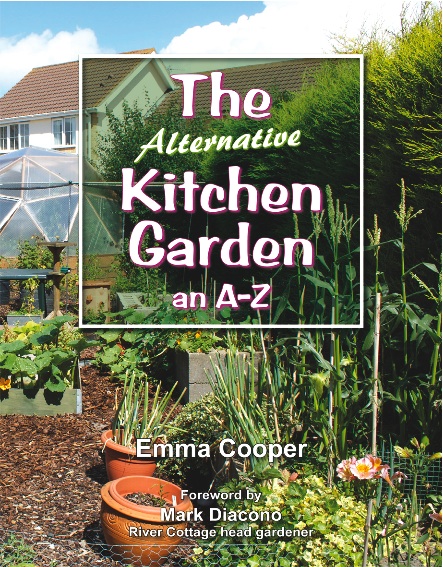
cover

Besides being a fellow blogger and heirloom gardener, Emma Cooper is a good friend of mine and very like minded.  I’m delighted she’s written this book, something I think makes a very important contribution to promoting environmentally friendly and sustainable living.

This book is a very personal account of things she’s done in her garden and home over the last several years, including building a geodesic dome shaped greenhouse, raising chickens as well as heirloom and alternative gardening.

As an alternative to a how-to book, Emma has written an A-Z account of the most important things she’s done.  Everything from Achocha to Zucchini.  She tells you what worked, and what didn’t.  If there are tips and tricks to be had, she spells these out.  She lets you know what she’s still doing, and things she doesn’t have time for any more.

If you’re experienced in alternative living and gardening, this book probably isn’t for you.  At the same time if you are just beginning or only a year or two into things, this is a great book to get ideas from.

While her experiences are based on a wet UK climate, much of what she writes about applies to everyone, regardless of where in the world you live.

To get an idea of the kind of person she is, have a look at her blog and listen to some of her podcasts.

Also important are Permanent Publications where you can purchase this book online if you live in the UK, and the associated Sustainability Centre.  Most people outside the UK can purchase this book online from Amazon.

Tom Wagner Pedigree Information

This is the final video from Tom Wagner’s Sunday workshop in Oxford. In this video Tom presents some pedigree information for seeds he left with us that day.

For a high resolution downloadable file to view directly on your computer, click here.

I haven’t carefully inventoried the seeds I have, but I think I have some of everything he talks about here. I’m pretty sure more is available on request. I probably have other seeds he didn’t talk about here, and I’ll have to ask Tom about these.

I also have a large number of tomato seeds, but Tom didn’t have information on these available on that day.

In the past I’ve offered a number of seeds to anyone reading this blog, but in this case it’s a little different.

These seeds are still on offer to anyone, but the intention is when you receive them you agree to participate in a breeding project that goes along with them. That means committing yourself to learning something about the genetics involved in the project, and reporting back to Tom on your progress.

When Tom left the seeds with me, I think he was thinking that members of the workshop or contacts within Europe would be the ones receiving the seeds, but as we know this blog has readers in most regions and many countries of the world. As far as I’m concerned, and I think Tom too, anyone who’s genuinely interested in participating in a breeding project is welcome to seeds. I’m personally willing to send them anywhere.

So, regardless of where you live; Europe, North America or elsewhere, if you’re interested in joining a tomato or potato breeding project, please get in touch! There’s really a lot of very exciting biodiversity to work with here.