

You can find an updated list of Paquebot’s seeds here.
Seed Network Updates
I’ve been very busy lately, and I’m behind on updates people asked me to make on the Seed Network page. Some people asked for updates an embarrassingly long time ago, and I think they are all now taken care of.
I’ve also gone through and just done a general clean up of old links and removed links to people who don’t seem to be publishing a current list of seeds.
If I’m missing anything, or if you would like to be added or removed from the list, please let me know. If I’ve deleted you in error, please accept my apologies and let me know so I can put you back.
If you’re looking for seeds to grow in 2010, please have a look at the current list!
A Favorite Non-Gardening Blog
Does anyone else out there read the White House blog?
Maybe it’s not something everyone would admit to, but I read this blog from time to time and find it very interesting. With as many as 5-10 posts per day, many of them very long, I certainly don’t keep up with them all. I do however come across some real gems from time to time, like this recent one entitled Newt Gingrich Gets It Wrong.
Okay, I’m biased. In general I like Obama and the direction he’s trying to go in. I’m also no fan of Newt Gingrich. More than anything however, I think this is just a very well written piece and the White House really understands the concept of a blog and what to use it for.
A blog is really a personal expression of who you are and what you want to say. When you read someone else’s blog, you really gain a very personal insight into who they are and what they’re thinking. Of course Obama doesn’t write any of the posts himself, but instead has people close to him who are experts write for him, and it really offers an insight into the White House that’s never existed before. You can see exatly what’s got their attention and what they are working on at the moment, in near real time.
One of the most valuable things about a blog is the lack of rules. For example, I’ve been criticized in the past for identifying foods you should not eat or eat less of, in particular meat and other processed foods. This of course violates the idea you should only promote healthy foods, like the 5 servings of fruit and vegetables we are all supposed to care about. I’ve been criticized for not being a good journalist or scientist. Of course I’ve said many things that have upset people in general.
The truth of course is that I don’t represent the interests of the food industry, and I’m not writing as a journalist or scientist. Therefore, I’m simply not bound by the corresponding rules, and you end up seeing a more personal side of me than you might otherwise. Having said this, I do put some effort into not intentionally saying things that aren’t true, and don’t intentionally upset people just for the sake of doing it.
When President Obama makes a speech, or the White House gives a press conference, there are rules and protocols that go with this. Beyond that, it’s up to the various TV networks and news publications to further filter and condense what was said. Something like the post I linked to above about Newt Gingrich would never survive this sort of condensing and processing, and the average person is unlikely to ever get that message.
The White House blog is not bound by the rules of traditional media. I really like that I can go there directly, see the information they want me to see, presented in the way they want me to see it. I think it reflects well on the Obama administration that they can do this so effectively. I think this kind of communication is changing Democracy the way we know it.
Holy Beans
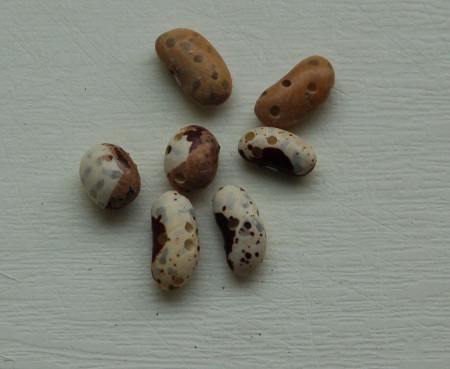
Years ago now, I posted the advice that if you save beans from your garden, you should freeze them before storing them. This year, I’m paying the price of not following my own advice.
In addition, these probably have something to do with it:
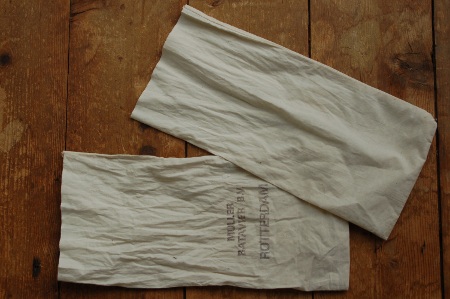
These are sacks I buy my coffee in. I’ve posted about this before too. I buy green coffee beans, that come from many exotic tropical places in the world, then roast them myself.
The holes in my beans are from Bean Weevils, more specifically I suspect Coffee Bean Weevils.
Of course I thought I was being clever by reusing my coffee sacks to store my garden beans!
In my case, I think I caught it pretty fast. I first noticed them in November, and quickly froze my bean seeds. Weevils are hardy enough to survive a day or two in the freezer, but are usually killed after several days. Occasionally you have to thaw and refreeze the seeds, in order to mimic the weather cycles that cause them to hatch, in order to kill remaining eggs. In my case, freezing them once seems to have taken care of it.
I’ve had a couple of reinfestations over the last few weeks, and by now all of my bean seeds are a little suspect. I don’t think I lost any important varieties, but did throw some unimportant ones away. The most irritating thing of course is now my beans aren’t appetizing to eat, because there are dead larvae hidden away in many of them. I’m not sure how this will impact the germination rates of my seeds, but I’m sure it will be reduced for many of them.
For those of you hoping to trade bean seeds with me, I’m sure you’ll understand why I’m not sending them out this year.
Seed storage is an all too often neglected topic, and one that’s very important. I’ve heard it said loosing seeds in storage is more common than crop failures.
You often have to balance risks like this. It’s very possible for example to lose seeds in the process of freezing them, or storing them in an airtight container. It’s also possible to lose them to pests like this. Sometimes there aren’t any right or wrong answers…
New Frontiers in Genetic Engineering
I was browsing some older posts from Matt’s blog, and I came across this.
In fact this is something I’ve known for a while, and coincidentally sent Matt an email about the other day, but I’ve never posted here on the subject.
It’s just a fact, the science of genetic engineering (GE) is quickly moving out of the laboratory and into the home. Not just in our ability to buy products that are themselves a result of GE, but also in our own ability to make GE organisms.
Already, if you have a well equiped home, it’s possible to do an awful lot. The cost of this equipment is within the budgets of many people, it’s only getting cheaper and it’s accuracy increasing.
The amount of publicly available data that can assist GE is also increasing at a dramatic rate; including things like decoded genomes and cataloges of marker genes (a fancy term that just means genes with a known trait). All of this applies to plants, microorganisms, animals and even humans.
So while the debate now often centers on the latest Roundup ready gene Monsanto inserted into our soybeans, tomorrow it could be the latest accident caused by a teenager or the mess intentionally caused by someone knowledgeable.
I often compare GE to abortions. I don’t really think it makes sense for anyone to be for or against abortions. An abortion is just a medical procedure. You can argue if it’s immoral, talk about it in terms of legal or illegal, safe or unsafe, early or late, but you can never deny the existence of the procedure itself.
This is really where we are now with GE. It doesn’t make sense to call it good or bad. The genie is out of the bottle. Now it’s time to start learning as much as possible as quickly as possible about the science, and to focus honestly and diligently on what the real risks are.
In the meantime, this crap doesn’t belong in our food or the environment, until we’ve had a chance to honestly research and learn more about it!
