

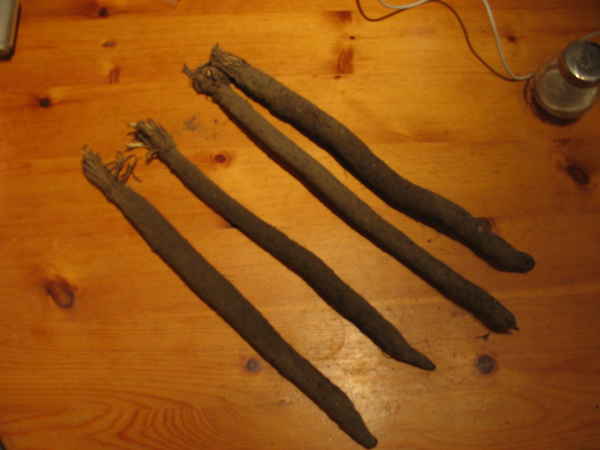
You read it here first!
I think Black Salsify will be the next ‘powerfood’ in the US. Already, the number of people searching for information about it and ending up on this blog is way up.
It’s best prepared peeled, cut into bit sized pieces and steamed in a small amount of water for a few minutes until tender. You can test it with a fork. Some people eat it unpeeled, and in any case it’s not necessary to remove all the peel, 70-80% is good enough. To prevent browning put the cut pieces in acidulated water (water with a little lemon juice or vinegar added), until ready to cook.
Black Salsify has a sap like substance that’s difficult to remove from your hands. To make cleanup easier afterwords, rub a little cooking oil on your hands before you begin.
Serve black salsify with a pat of butter on top, and salt and pepper to taste. It’s nice on a bed of quinoa, which is how we often have it!
The taste is often compared to oysters, and it’s sometimes called the oyster plant.

By “black salsify” do you mean what I call Scorzonera?
Yes! They call it Scorzonera here too. In the US they know it as black salsify, and was under the impression that was true in most English speaking places — but I could be wrong.
There’s also just plain salsify which is Tragopogon porrifolius.